
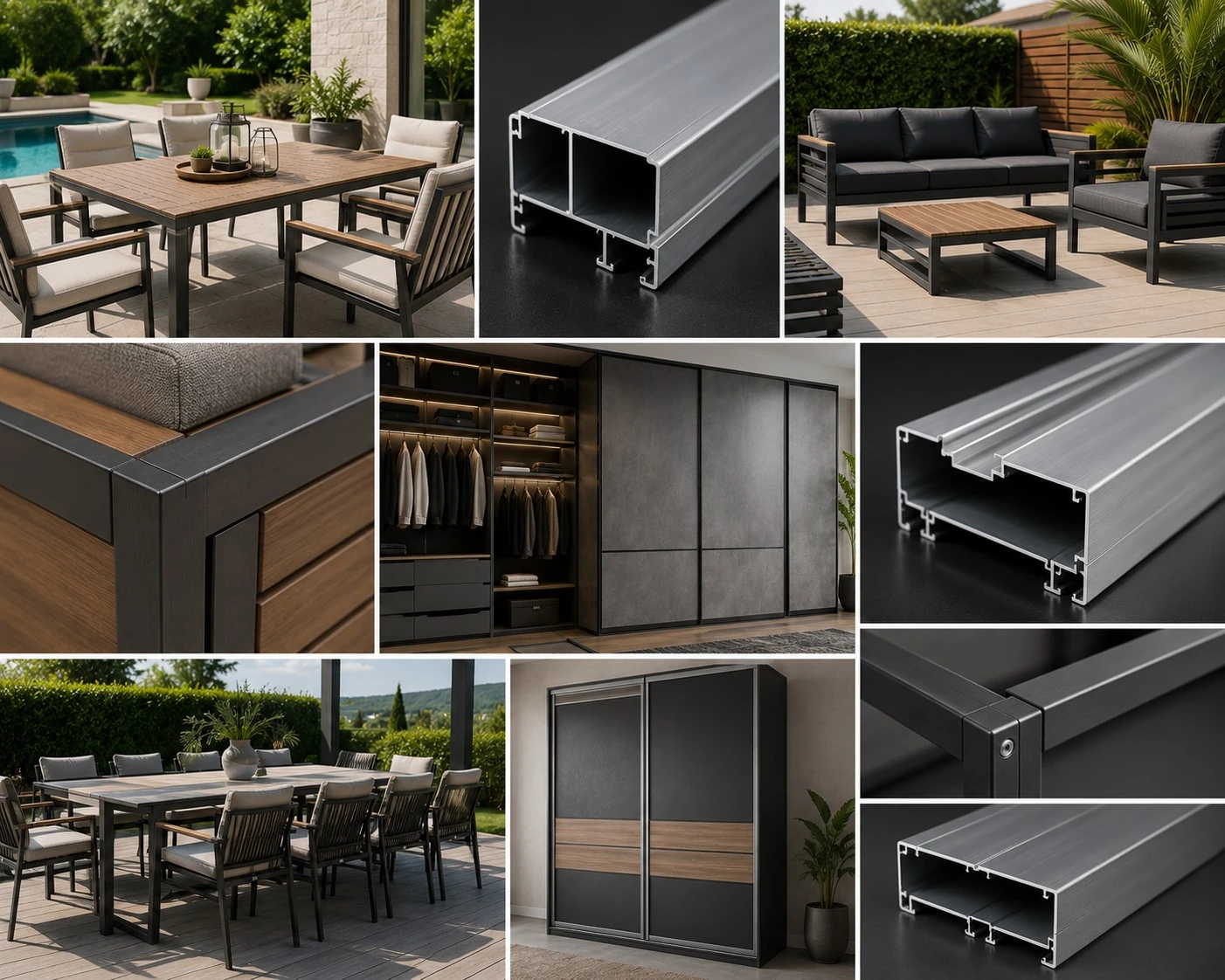
Aluminium profiles offer long-lasting solutions in a wide range of sectors, including construction, architecture, the automotive industry, transport, energy and industrial applications.
In the course of life, over the years.
Following the aluminium profile production process, the profiles are transformed into functional and aesthetic solutions across various sectors. Thanks to their lightness, durability, corrosion resistance and the ability to be shaped into various forms, aluminium profiles are used in many areas of modern life. Profiles, which can be produced in various cross-sections and dimensions using extrusion technology, can be shaped to meet the technical and design requirements of different sectors.
Where Are Aluminium Profiles Used?
Aluminium profiles are primarily used in:
Window and door frames → Furniture → Curtains → Shutters → Awnings → Automatic doors → Solar systems → Industrial applications
.
Each sector expects different properties from aluminium. Whilst aesthetics and durability take precedence in architectural applications, profile geometry, load-bearing capacity and machinability may be more decisive factors in furniture and industrial applications.
Different Solutions for Different Sectors
Aluminium profiles have a wide range of applications, from window and door systems to garden furniture, from blind and shutter mechanisms to awning systems, and from automatic doors to solar energy systems.
The profile’s cross-section, dimensions and surface finish are determined according to the intended application, ensuring the product meets both technical and aesthetic requirements.