
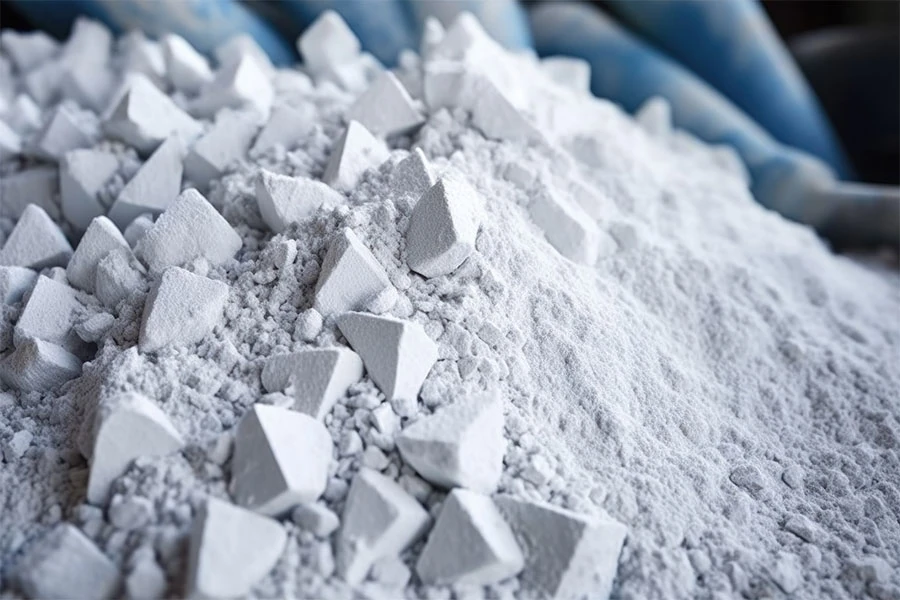
Alumina is produced by processing bauxite. This stage is one of the key turning points in the preparation of aluminium for production.
From ore to raw material.
The second important stage in aluminium’s journey through nature is alumina.
Alumina (Al₂O₃), obtained by processing bauxite ore, is the key intermediate product used in the production of metallic aluminium. In other words, alumina is the crucial link between bauxite and metallic aluminium.
How is Bauxite Converted into Alumina?
The method most widely used worldwide for producing alumina from bauxite is known as the Bayer Process. In this refining process, bauxite undergoes chemical treatments to separate the aluminium-containing components from other minerals.
The process generally involves:
Bauxite → Grinding → Leaching → Separation → Precipitation → Calcination → Alumina
stages.
In the Bayer Process, bauxite is treated with a caustic soda solution to dissolve the aluminium-containing components. Aluminium hydroxide is then precipitated from the solution and converted into alumina through a high-temperature calcination process.
Why is Alumina Important?
Alumina is the primary feedstock for the production of metallic aluminium. The alumina obtained is subjected to an electrolytic reduction process in the subsequent stage to convert it into aluminium metal. This process is known as the Hall-Héroult Process.
In this way, bauxite ore extracted from nature is gradually transformed into the raw material for aluminium, which is used in various sectors of the modern world.
The Bayer Process
The industrial transformation from bauxite to alumina.
The Bayer Process is the fundamental industrial method used to refine bauxite into alumina. Developed by Carl Josef Bayer, the process has remained one of the aluminium industry’s primary production methods since 1888.
The process can be summarised in four main stages:
01 — Leaching
: Bauxite is treated with a caustic soda solution to dissolve the aluminium-containing components into the solution.
02 — Separation
Çö: The insoluble components are separated from the solution.
03 — Precipitation
Çö: The aluminium hydroxide present in the solution is precipitated under controlled conditions.
04 — Calcination
: The aluminium hydroxide is processed at high temperatures to convert it into alumina, i.e. Al₂O₃.