
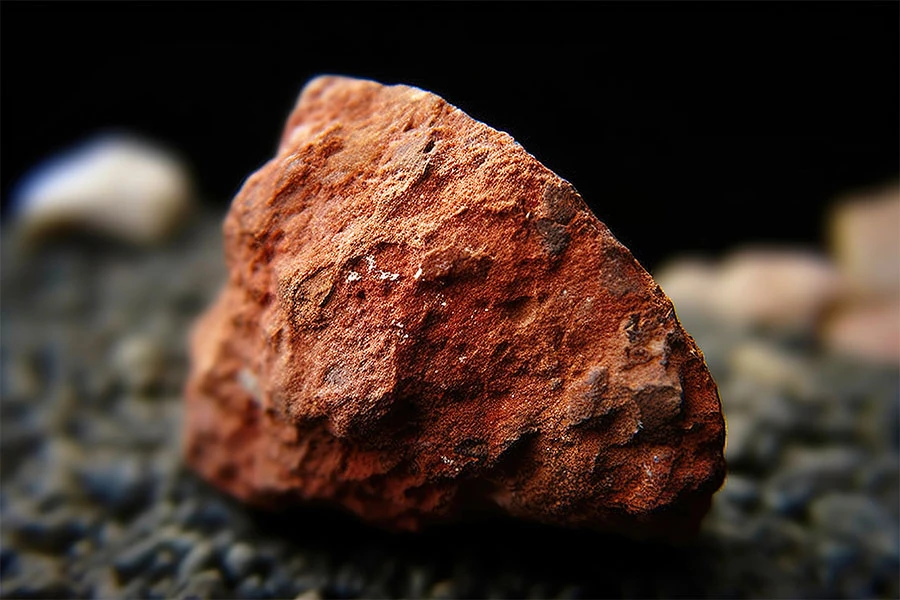
Bauxite ore, the source of aluminium, is extracted from the earth. This natural resource forms the first step in aluminium production.
The journey begins in nature.
Bauxite: The Starting Point for Aluminium in Nature
Bauxite is the most important ore used in aluminium production. This naturally occurring mineral contains various components, primarily aluminium hydroxide minerals, as well as iron oxide, silica and titanium. The mineral structure and composition of bauxite may vary depending on the geological characteristics of the region in which it is found.
To produce aluminium, bauxite is not converted directly into metal. First, the ore is processed using a refining method known as the Bayer Process to produce alumina (Al₂O₃). The alumina is then converted into aluminium using an electrolytic process in the next stage.
From Bauxite to Aluminium
The journey of bauxite as it is transformed into aluminium profiles involves several key stages:
Bauxite → Alumina → Aluminium → Extrusion → Aluminium Profile
The alumina obtained from processing bauxite is the primary raw material for aluminium production. Thus, the mineral extracted from nature becomes the starting point for aluminium products used in a wide range of fields, from modern architecture to the automotive industry, and from energy to industrial applications.
Why is Bauxite Important?
As the natural source of aluminium, bauxite is one of the key raw materials of the aluminium industry. The vast majority of bauxite produced worldwide is used in alumina production, and a significant proportion of the resulting alumina is used to produce metallic aluminium.
Therefore, to understand the story of an aluminium profile, one must look right back to the very beginning of the journey: the bauxite ore.