
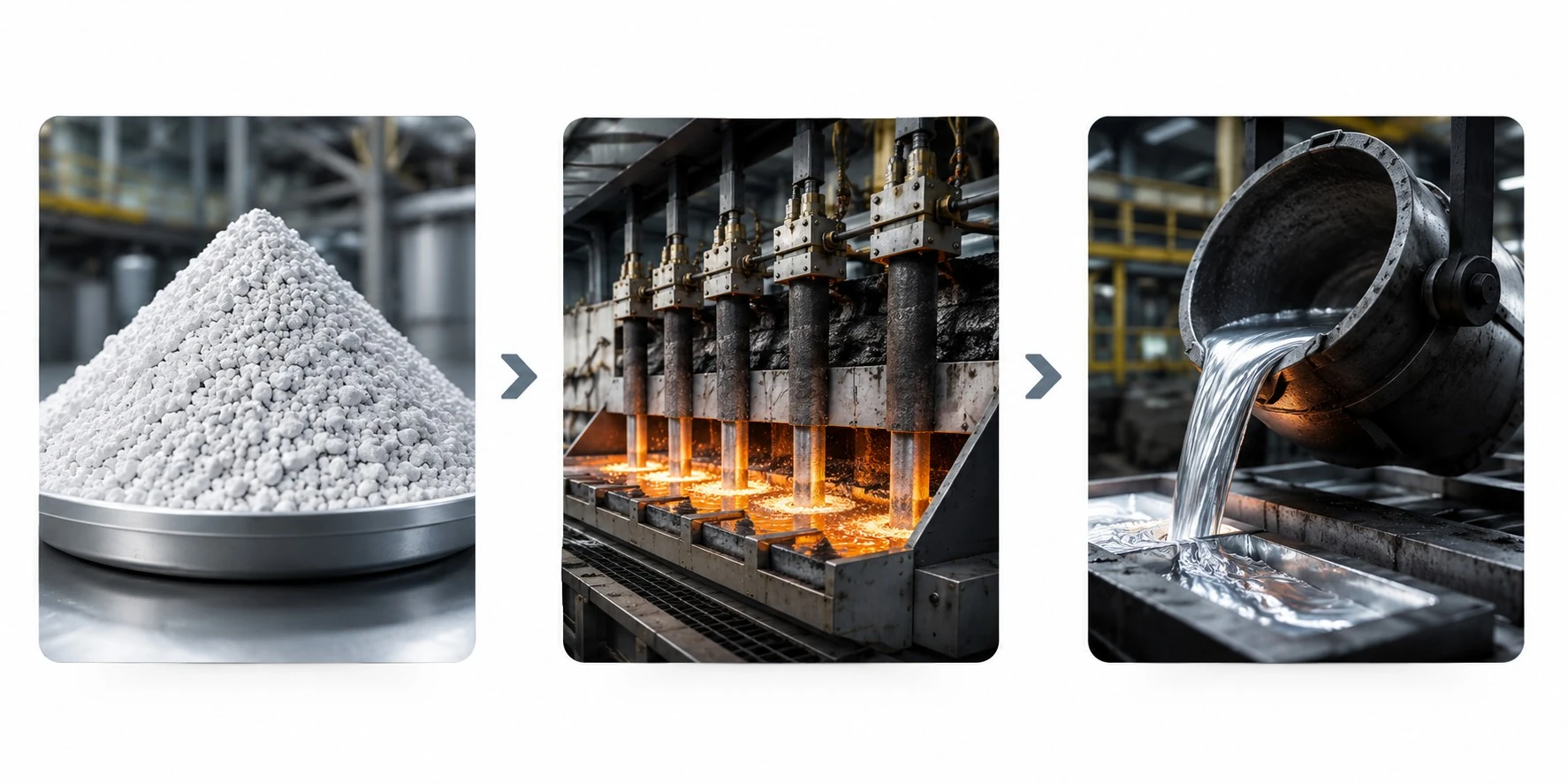
Alumina is converted into pure aluminium through the electrolysis process. This produces the basic material from which aluminium for use in various sectors is derived.
Metal shaped by energy.
Alumina, derived from bauxite ore, is the primary raw material for aluminium production. Alumina is converted into metallic aluminium using electrical energy in high-temperature electrolytic cells.
This stage is one of the most important turning points in the aluminium production process.
How is Alumina Converted into Aluminium?
The Hall-Héroult process is widely used in the primary production of metallic aluminium.
In this method, alumina is dissolved in an electrolytic bath containing molten cryolite. A high electric current passed through the cell causes the chemical bond between aluminium and oxygen to break.
Consequently;
Alumina (Al₂O₃) → Electrolysis → Liquid Aluminium
is produced.
The molten aluminium collects at the bottom of the electrolytic cell and is tapped at regular intervals and sent on to the next stages of production.
The Hall-Héroult Process – The moment aluminium is transformed into metal.
Developed independently in 1886 by Charles Martin Hall and Paul Héroult, the Hall-Héroult Process is today the primary method for aluminium production.
The process essentially proceeds as follows:
- Feeding the Alumina: The alumina obtained in the previous stage is fed into the electrolytic cell in a controlled manner.
- Electrolytic Bath: The alumina is dissolved in a cryolite-based electrolyte at high temperature. This environment facilitates the electrolysis process.
- Electric Current: A high-amperage direct current is passed through the electrolytic cell. The electrical energy facilitates the separation of aluminium and oxygen from the alumina.
- Liquid Aluminium: The separated metallic aluminium collects at the bottom of the cell in a liquid state. It is then retrieved and sent on to subsequent production stages such as casting and alloying.
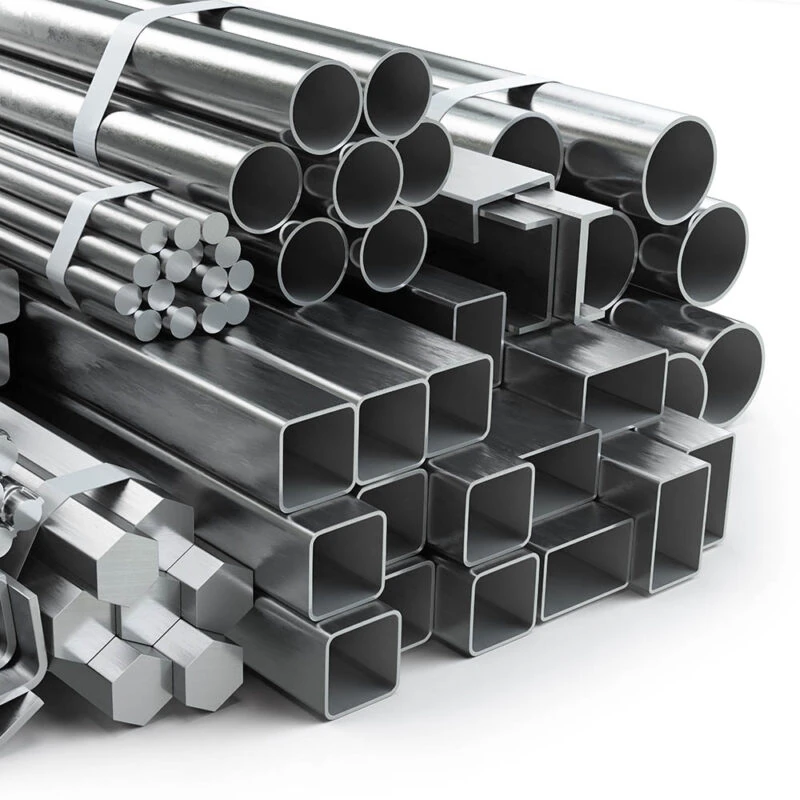
From Liquid Aluminium to a New Beginning
The molten aluminium obtained as a result of electrolysis is not the final stage of production.
The molten metal can be alloyed to achieve the required properties, cast, and transformed into semi-finished products in various forms.
Following this stage, the aluminium:
Liquid Aluminium → Casting → Ingot → Extrusion → Aluminium Profile
.
It is at this point that aluminium is transformed into the raw material for various profiles and products designed to meet architectural and industrial needs.