
Aluminium that has reached the end of its useful life is collected, sorted and fed into the recycling process. In this way, this valuable material is reintroduced into the economy.
The journey doesn’t end here.
When aluminium reaches the end of its useful life, its journey is not over. Thanks to recycling, it can be reprocessed and used in the manufacture of new products.
How is Aluminium Recycled?
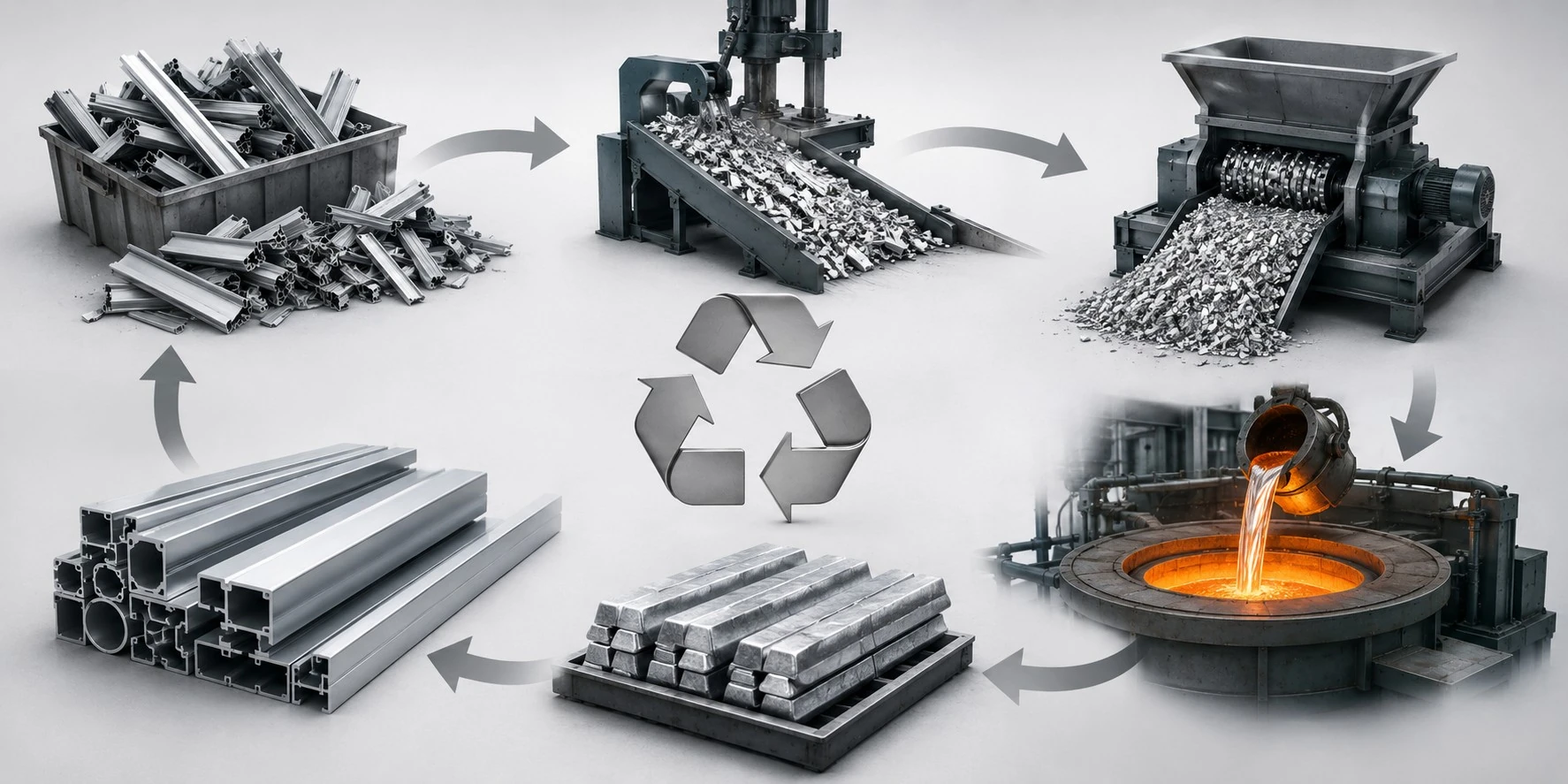
The recycling process generally involves:
Collection → Sorting → Processing → Smelting → Casting → New Aluminium Products
stages.
Used aluminium products are first collected and separated from other materials. They are then processed and melted down appropriately, and converted back into aluminium raw material. The resulting material can be reused in the production of new aluminium products and profiles.
Why is Recycling Important?
Recycling aluminium contributes to the more efficient use of natural resources and helps reduce the amount of primary aluminium required for production. It also helps to reintroduce end-of-life products back into the economy.
For this reason, aluminium stands out as a circular material, spanning the cycle from production to use and from use to recycling.